
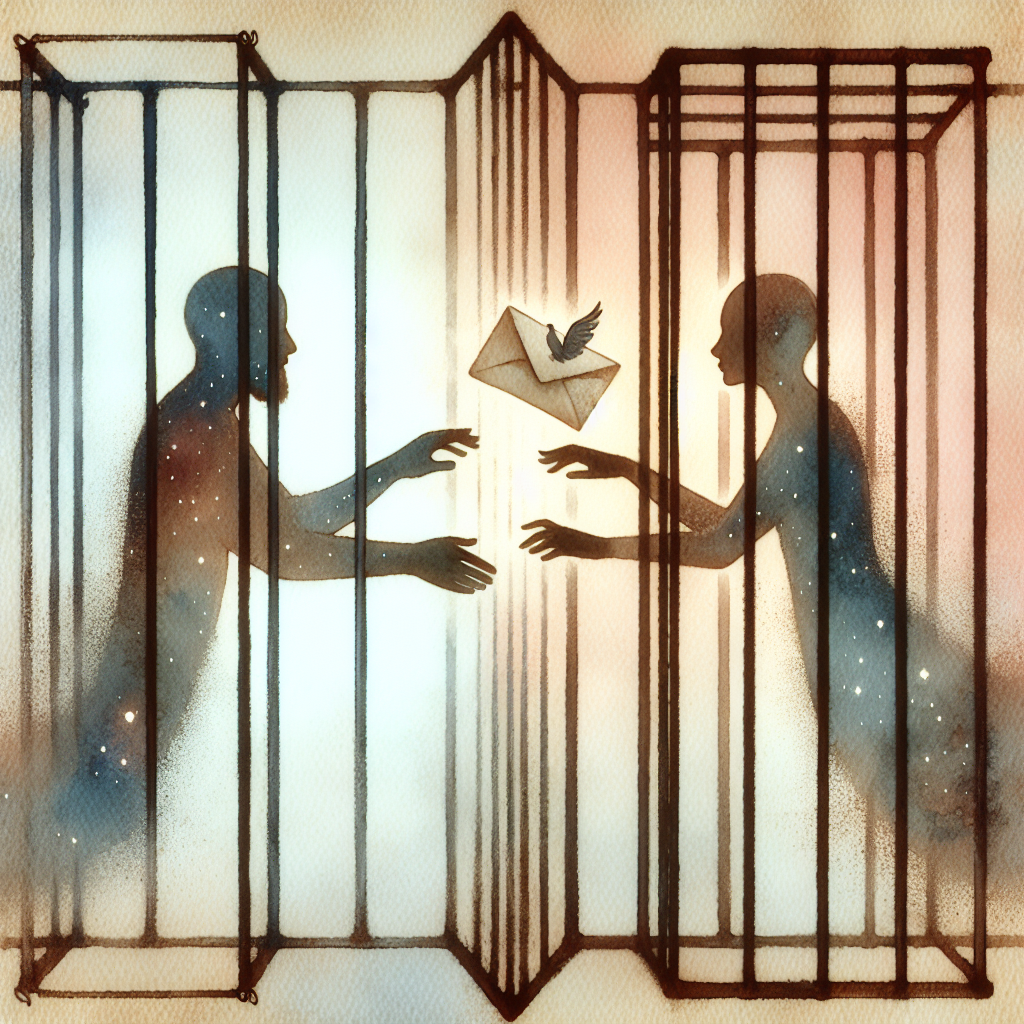
Breaking Isolation: Your Letter, An Inmate’s Lifeline
Have you ever wondered what it feels like to walk out of prison, hearing the clang of the gates behind you, and knowing that the world you once knew has moved on without you? For many, this experience is like stepping into a new reality—a reality filled with challenges and uncertainties. You might be thinking, “Why is it so hard to start anew?” or “How can I help?” The truth is, employment after incarceration is one of the most significant hurdles faced by those reentering society. It’s not just about finding a job; it’s about rebuilding a life.
Consider this: over 600,000 individuals are released from state and federal prisons each year in the United States. Many of these individuals are eager to rejoin the workforce and contribute positively to their communities. However, the stigma of a criminal record often overshadows their qualifications and aspirations, leaving them isolated in their quest for a second chance. This is where empathy and understanding from society, including employers and individuals like you, can play a transformative role.
It’s important to recognize that reentry after prison is a journey fraught with obstacles, not least of which is the pervasive social isolation that can accompany the process. Imagine being on the outside, yet feeling completely disconnected. For many formerly incarcerated individuals, this isolation can be suffocating. They leave behind not just the physical confines of a cell but also a social network that, for better or worse, has been their world. Rebuilding these networks in a society that often views them with suspicion can be daunting.
This is why the concept of second chance hiring is so powerful. Employers who are willing to look beyond the past and see the potential in a person can make a significant difference—not only in that person’s life but in the community at large. Take, for example, the story of James, who after serving a decade in prison for a youthful mistake, was given a chance by a small business in his town. The opportunity to work not only provided James with financial stability but also a sense of belonging and purpose. His dedication and hard work eventually led him to a managerial position, where he now advocates for others in similar situations.
But what if you’re not an employer? How can you still contribute to breaking the cycle of isolation? Here’s where the power of a simple letter comes into play. Just as employment opens doors to new beginnings, so does connection. Writing a letter to someone incarcerated can be a beacon of hope. It’s a reminder that they are not forgotten, that someone out there believes in their potential for change and growth. This simple act of kindness can bridge the gap between isolation and community, offering a lifeline of support and understanding.
Statistics show that maintaining connections with the outside world can significantly reduce recidivism rates. This means that by becoming a pen pal, you’re not just offering friendship—you’re actively participating in a system of rehabilitation and reintegration. You’re supporting someone’s journey towards a better life and contributing to a more inclusive society.
At EliteInmates.com, we believe in the power of these connections. We see every letter as an opportunity to make a real difference in someone’s life. So why not take the first step today? Reach out, learn about an incarcerated individual’s life story, and become a pen pal. You have the power to make a meaningful impact, to offer hope in the form of friendship, and to help rewrite someone’s narrative. Join us at EliteInmates.com, and together, let’s build a bridge toward a more compassionate world.
Phone: (302) 201 - 0770
Address: 8 The Green #8840 Dover, DE 19901
info@eliteinmates.com
We write rarely, but only the best content.
