
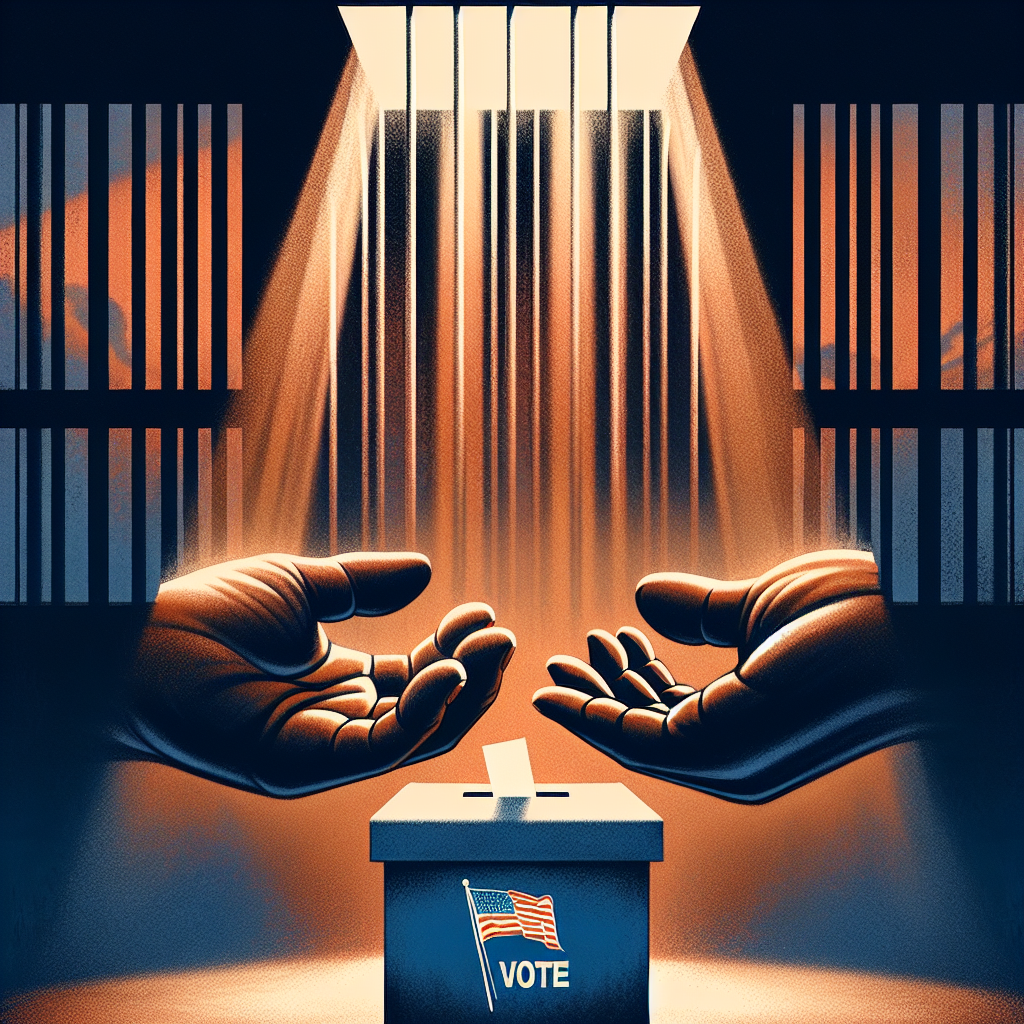
Restoring Voting Rights After Felony Conviction
What if you discovered that your past mistakes were like chains around your future, dragging behind you every step you take? For many individuals who have been through the justice system, this is more than just a metaphor — it’s their reality. Imagine trying to rebuild your life, armed with new skills and a renewed sense of purpose, only to find that a felony conviction continues to lock doors that were once open. Among these barriers, the challenge of restoring voting rights after a felony conviction looms large, a symbol of disenfranchisement that impacts not just voting but the very soul of citizenship.
Every year, thousands of individuals reenter society after serving time, filled with the hope of reconnecting with their communities, contributing to society, and starting anew. But the journey is not an easy one. Reentry after prison is fraught with hurdles, from finding stable employment to reintegrating into a community that may have moved on without them. The issue of voting rights restoration is one aspect of this complex puzzle, reflecting broader themes of justice, redemption, and second chances.
Across the United States, laws regarding voting rights for formerly incarcerated individuals vary greatly. In some states, as soon as you finish your sentence, including parole and probation, your right to vote is automatically restored. In others, the process is much more complicated, involving lengthy applications and sometimes even requiring a pardon from the governor. This patchwork of regulations can be confusing and discouraging, often leaving individuals feeling powerless and excluded from the democratic process.
The loss of voting rights is more than just the inability to cast a ballot; it’s a profound disconnection from the community. Voting is a cornerstone of citizenship, a way to voice opinions and influence the future. Denying this right is denying individuals a chance to fully participate in the society they are trying to rejoin. Yet, there are stories of success and change. For example, Florida’s Amendment 4, passed in 2018, restored voting rights to over a million people with felony convictions, provided they completed their sentences. This monumental change was driven by grassroots advocacy and a collective belief in second chances.
Restoring voting rights is not merely about rectifying a legal status; it’s about acknowledging the humanity of individuals who have served their time. It’s about offering a path to redemption, a chance to prove that past actions don’t define future potential. This is closely tied to the concept of second chance hiring — efforts by companies to provide employment opportunities to those who have been incarcerated. Employment after incarceration is a critical step in breaking the cycle of recidivism, offering stability and a sense of purpose.
Consider the story of Mark, a hypothetical but all-too-real example of someone who, after making mistakes in his youth, served his time and yearned for a fresh start. With a job at a local manufacturing plant and a supportive community, Mark felt hopeful. Yet, being unable to vote left him with a lingering feeling of exclusion, as if a part of him was still held captive by his past. It wasn’t until his state enacted changes to restore voting rights for individuals like him that Mark truly felt like a full member of his community.
The journey to restore voting rights and provide employment opportunities embodies the spirit of second chances. It’s about believing that people can change, grow, and contribute positively. The work of advocacy groups, reentry services, and supportive employers is crucial in this landscape. They provide the scaffolding for individuals seeking to rebuild their lives, offering guidance, resources, and hope.
As we consider the paths to empowerment and reintegration, it’s essential to remember the power of connection and community. At EliteInmates.com, you can be a part of this transformative journey by becoming a pen pal to someone currently incarcerated. Your letters can offer hope, friendship, and a sense of belonging, helping to reduce loneliness and support rehabilitation. So why not take the first step today? Reach out, learn about an incarcerated individual’s life story, and become a pen pal. You have the power to make a meaningful impact — join us in this mission of connection and compassion at EliteInmates.com.
Phone: (302) 201 - 0770
Address: 8 The Green #8840 Dover, DE 19901
info@eliteinmates.com
We write rarely, but only the best content.
